
Light Weighting
Redesign work that removes mass from a component by changing its material or its section, usually swapping metal for a reinforced polymer or composite. The saving only counts once the new part has met the same load cases the metal one did. SES holds the range as an authorised JK Fenner distributor, covering materials Reinforced thermoplastics, thermosets, composites; reinforcement Glass, carbon and mineral fillers; mass saving Depends on load case and achievable section; joining Moulded-in inserts, bonding, over-moulding. Executions include metal-to-polymer substitution, composite structural components, over-moulded metal inserts, reinforced polymer pulleys and covers, among others. It is specified most often into EV chassis and drivetrain brackets and commercial vehicle under-bonnet components. Every part is genuine JK Fenner through official channels, with designation, specification and options confirmed against your duty before it ships — supplied from Kolkata and our branch network, with breakdown cover that does not sit in an inbox.
Send an enquiry
Check Price & Availability.
Give us the size or the failed part — we reply on WhatsApp.
Trusted across Metals & Energy
Supplying India’s Industrial Names.
From integrated steel plants to power utilities and EPC majors — the works that cannot afford a counterfeit part specify through SES.
















Objective
Mass reduction at equal or better life
Method
Material substitution and section redesign
Constraints
Stiffness, creep, continuous temperature
Proof
Fatigue and environmental endurance testing
Where it runs.
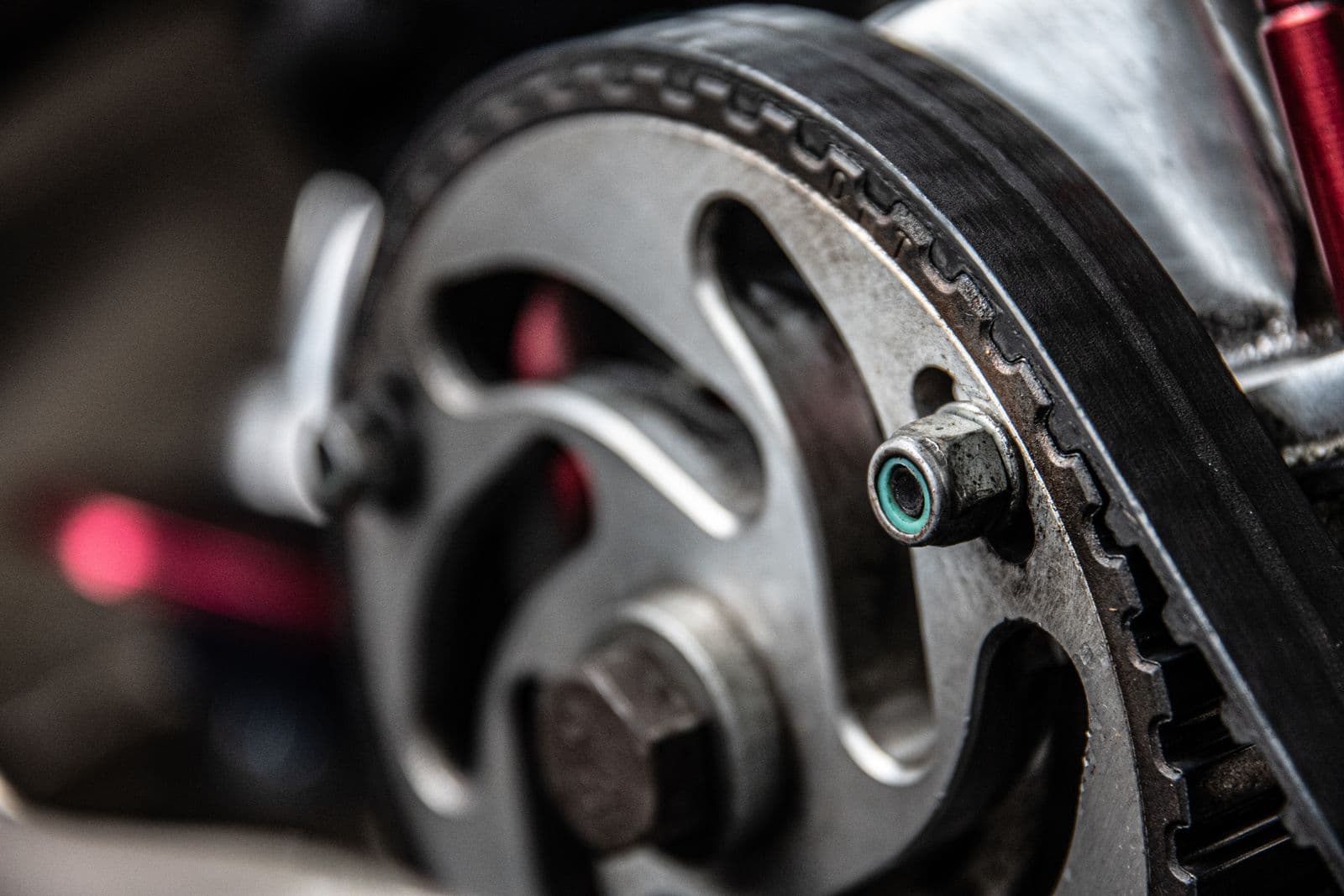
You will find Light Weighting in the parts of a plant where this particular duty actually occurs. In practice that means EV chassis and drivetrain brackets, commercial vehicle under-bonnet components, engine front-end pulleys and covers, and equally two-wheeler structural and trim parts, railway interior and equipment mountings, agricultural machinery guards and housings. What links them is the duty rather than the machine name — objective: Mass reduction at equal or better life. If your installation is not on that list it matters less than you would think: the operating condition decides the specification. Send us the load, the speed, the running temperature and the environment it runs in, and we will match it to the right execution in the JK Fenner range and confirm what is in stock.
Specify it against the duty.
Specification here follows the operating condition, not the catalogue. Part is a steel bracket carrying a mostly static load — A glass- or mineral-reinforced polymer with moulded-in inserts to spread the fastener load. Clamped directly under a bolt head, polymer creeps and the joint goes slack. Component sits close to an exhaust, motor or brake — Design to the continuous-use temperature, not the short-term peak. Polymers lose stiffness long before they show any visible sign of distress. Assembly is splashed with fuel, oil or coolant — Chemical compatibility measured at temperature and under stress. A polymer that survives a room-temperature soak can craze in the same fluid when hot and loaded. Where two of those apply at once, specify for the harsher of the two — under-specifying is what puts the part back on the bench a month later. Send us the duty and we will confirm the execution.
Ordering this from SES.
Weigh the finished joint, not the moulding. Polymer parts usually need larger inserts, load-spreading washers and a different fastener, and half the headline saving can disappear by the time the assembly is complete.