
Angular Contact Ball Bearings
The raceways are offset relative to each other so the line of contact through the balls runs at an angle to the bearing axis. That angle lets the bearing carry a heavy thrust component that would push a deep groove bearing off its ball track. SES holds the range as an authorised SKF distributor, covering bore range About 10 mm to 500 mm across executions; contact angles 15, 25, 30 and 40 degrees commonly available; arrangements Back-to-back, face-to-face, tandem; cage types Polyamide, pressed steel, machined brass. Executions include single row angular contact ball bearings, double row angular contact ball bearings, four-point contact ball bearings, matched bearing sets, among others. It is specified most often into vertical pump and mixer shafts carrying rotor weight and worm gear and bevel gear output shafts. Every part is genuine SKF through official channels, with designation, specification and options confirmed against your duty before it ships — supplied from Kolkata and our branch network, with breakdown cover that does not sit in an inbox.
Send an enquiry
Check Price & Availability.
Give us the size or the failed part — we reply on WhatsApp.
Trusted across Metals & Energy
Supplying India’s Industrial Names.
From integrated steel plants to power utilities and EPC majors — the works that cannot afford a counterfeit part specify through SES.





















Contact angle
15, 25, 30 or 40 degrees by design
Thrust
One direction per row
Stiffness
High, rises with contact angle
Mounting
Single, paired or in sets

Where it runs.
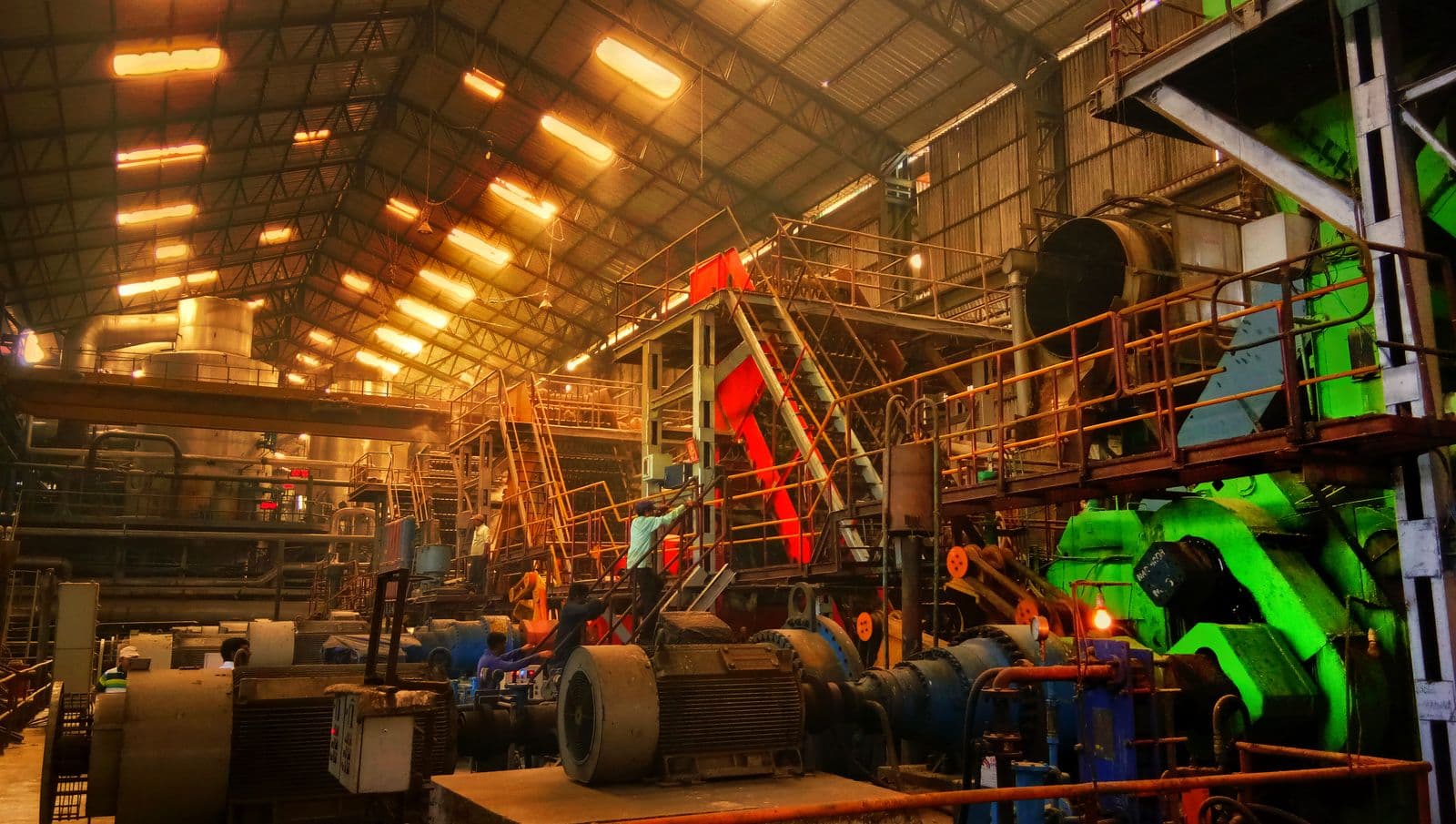
You will find Angular Contact Ball Bearings in the parts of a plant where this particular duty actually occurs. In practice that means vertical pump and mixer shafts carrying rotor weight, worm gear and bevel gear output shafts, machine tool spindles and grinding heads, and equally screw compressor rotor locating positions, crane hook blocks and slewing drive pinions, extruder and pelletiser thrust positions. What links them is the duty rather than the machine name — contact angle: 15, 25, 30 or 40 degrees by design. If your installation is not on that list it matters less than you would think: the operating condition decides the specification. Send us the load, the speed, the running temperature and the environment it runs in, and we will match it to the right execution in the SKF range and confirm what is in stock.
Specify it against the duty.
Specification here follows the operating condition, not the catalogue. Thrust dominates and the shaft must be held rigidly in both directions — A back-to-back pair or a double row type. A single row bearing left unopposed will unload, the balls will lose contact and the set will rattle itself apart. The shaft is long and grows axially with temperature — A back-to-back arrangement at the locating end and a free bearing at the other. Face-to-face over a long hot shaft loses its preload as the shaft extends. The thrust load is very high and speed is moderate — A 40 degree contact angle execution. A 15 degree bearing at the same thrust runs the ball contact ellipse over the raceway shoulder. Where two of those apply at once, specify for the harsher of the two — under-specifying is what puts the part back on the bench a month later. Send us the duty and we will confirm the execution.
Ordering this from SES.
An angular contact bearing has a thrust direction and the two faces look identical from the outside. Mark the loaded face on the housing before you pull the old bearing out, because fitted back to front it will be scrap within days.