
Cam Rollers
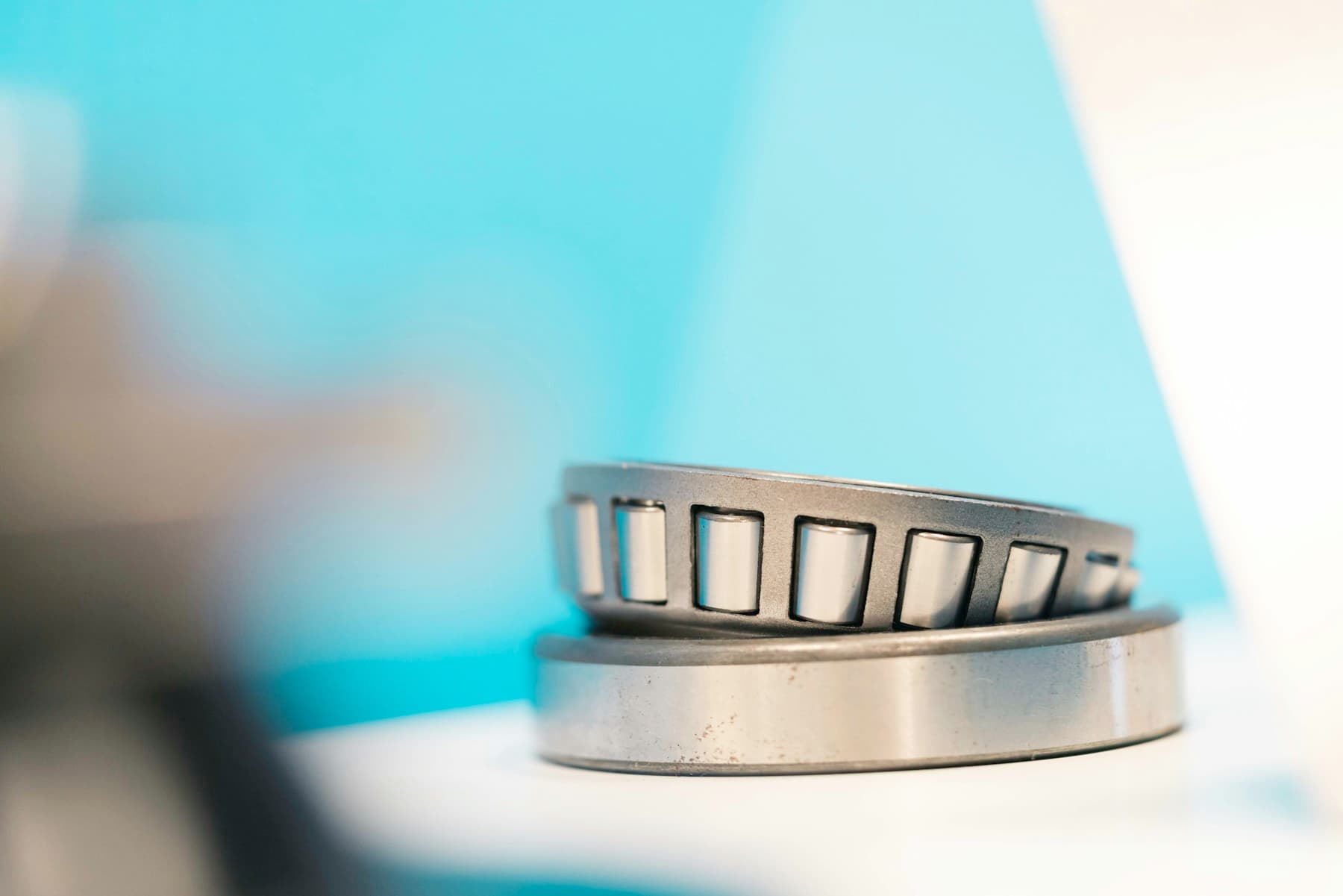
Double row angular contact ball bearings with a heavy outer ring, sealed on both sides and mounted on a shaft or pin through the bore. They take radial load with a useful axial component, which suits guide rollers that also take side thrust. SES holds the range as an authorised SKF distributor, covering series 361200 and related sealed cam roller series; outside diameter Approximately 30 mm to 130 mm; rolling elements Two rows of balls in angular contact; outer ring profile Cylindrical or crowned. Executions include cam rollers with cylindrical outer ring, cam rollers with crowned outer ring, sealed cam rollers with reinforced seals, cam rollers with extended inner ring. It is specified most often into mast and carriage rollers on forklifts and side loaders and guide rollers on furnace and coke oven doors. Every part is genuine SKF through official channels, with designation, specification and options confirmed against your duty before it ships — supplied from Kolkata and our branch network, with breakdown cover that does not sit in an inbox.
Send an enquiry
Check Price & Availability.
Give us the size or the failed part — we reply on WhatsApp.
Trusted across Metals & Energy
Supplying India’s Industrial Names.
From integrated steel plants to power utilities and EPC majors — the works that cannot afford a counterfeit part specify through SES.




















Design
Double row angular contact ball, thick outer ring
Load
Heavy radial plus axial from both sides
Sealing
Sealed both sides, greased for life
Mounting
On a through shaft or pin in the bore
Where it runs.
You will find Cam Rollers in the parts of a plant where this particular duty actually occurs. In practice that means mast and carriage rollers on forklifts and side loaders, guide rollers on furnace and coke oven doors, load-bearing rollers on telescopic booms, and equally side thrust rollers on transfer cars and slag pots, guide rollers in vertical lift and stacker equipment. What links them is the duty rather than the machine name — design: Double row angular contact ball, thick outer ring. If your installation is not on that list it matters less than you would think: the operating condition decides the specification. Send us the load, the speed, the running temperature and the environment it runs in, and we will match it to the right execution in the SKF range and confirm what is in stock.
Specify it against the duty.
Specification here follows the operating condition, not the catalogue. The roller carries side load as well as running load, as on a leaning mast — The double row angular contact geometry handles that thrust. A needle-based follower in the same position loses its cage to the axial component. The channel the roller runs in is a rolled section with mill scale — Use the crowned outer ring and accept the smaller contact patch. Running a cylindrical roller on an unmachined channel puts the whole load on the high spots and pits the outer ring. Roller is mounted on an eccentric pin for adjustment — Lock the eccentric positively after setting. A pin that turns under load walks the roller out of the channel and the mast jams at full lift. Where two of those apply at once, specify for the harsher of the two — under-specifying is what puts the part back on the bench a month later. Send us the duty and we will confirm the execution.
Ordering this from SES.
When a mast roller is replaced, measure the channel width at the top and the bottom of the travel. Channels spread near the bottom where the load sits longest, and a correctly sized roller fitted to a spread channel will still rattle and wear on one flank.