
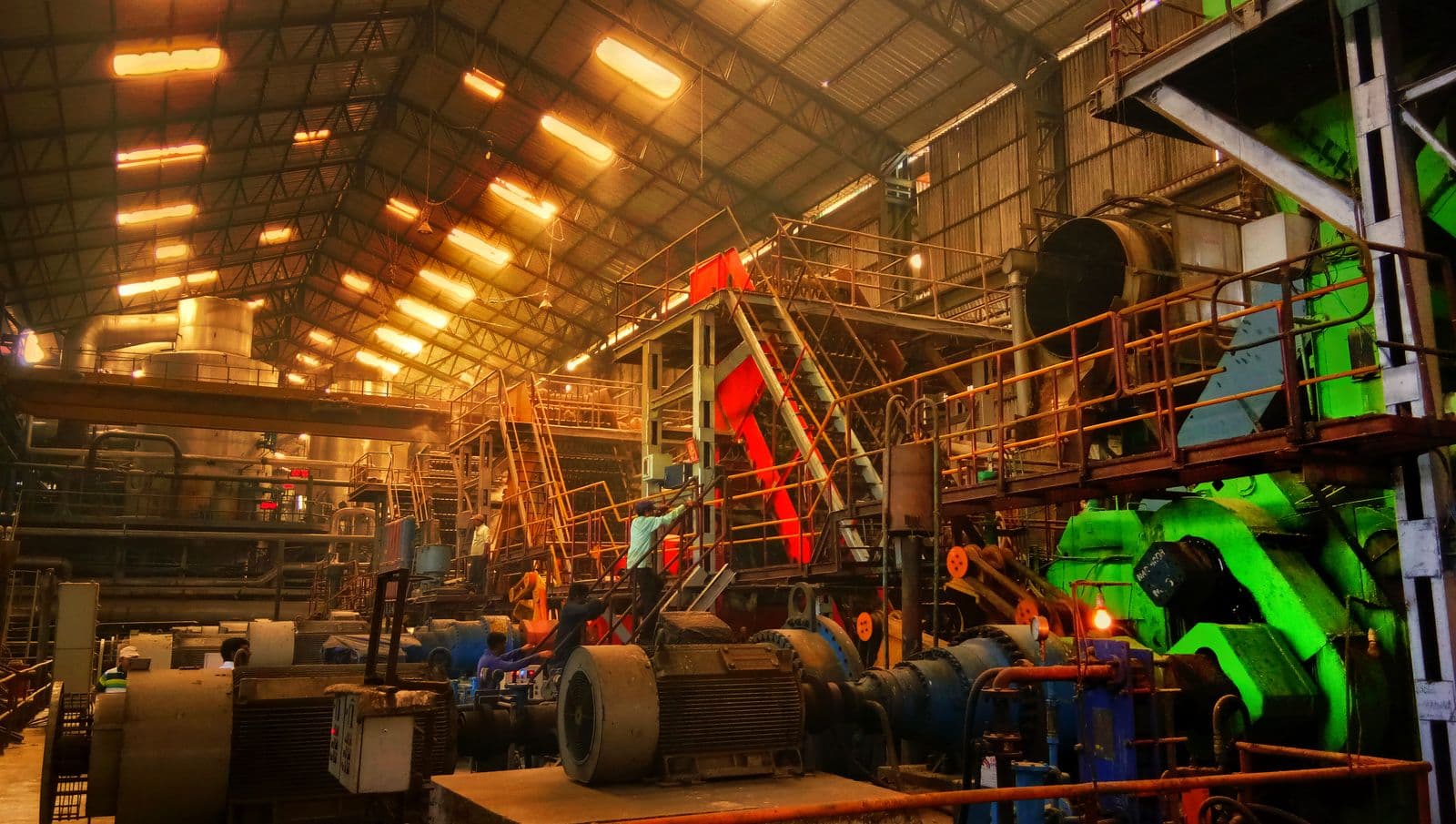
Lubrication System Components
The building blocks of a centralised lubrication installation: the pump that supplies lubricant, the metering devices that split it between points, the monitoring hardware that proves it arrived, and the control unit that decides when. Pick the architecture first, then the components follow. SES holds the range as an authorised SKF distributor, covering system types Progressive, single-line, dual-line, multi-line, oil and air; lubricants Oil from thin mineral grades to NLGI 2 greases; point counts A few points on one machine up to several hundred on a circuit; pump drives Electric, pneumatic, hydraulic and manual. Executions include supply units, heavy-duty barrel pumps, lubrication pumps and pump units, lubricant metering devices, among others. It is specified most often into sinter plant and blast furnace bearing points and cement mill, kiln and crusher lubrication circuits. Every part is genuine SKF through official channels, with designation, specification and options confirmed against your duty before it ships — supplied from Kolkata and our branch network, with breakdown cover that does not sit in an inbox.
Send an enquiry
Check Price & Availability.
Give us the size or the failed part — we reply on WhatsApp.
Trusted across Metals & Energy
Supplying India’s Industrial Names.
From integrated steel plants to power utilities and EPC majors — the works that cannot afford a counterfeit part specify through SES.

















Covers
Pumps, meters, sensors, controls, accessories
Media
Oil, fluid grease and NLGI 2 grease
Architectures
Progressive, single-line, dual-line, multi-line
Scale
One machine to a whole plant circuit

Where it runs.
You will find Lubrication System Components in the parts of a plant where this particular duty actually occurs. In practice that means sinter plant and blast furnace bearing points, cement mill, kiln and crusher lubrication circuits, paper machine circulating oil and grease systems, and equally long overland conveyor idler and pulley points, press shop and forging line grease circuits, port cranes, stackers and mobile bulk handling plant. What links them is the duty rather than the machine name — covers: Pumps, meters, sensors, controls, accessories. If your installation is not on that list it matters less than you would think: the operating condition decides the specification. Send us the load, the speed, the running temperature and the environment it runs in, and we will match it to the right execution in the SKF range and confirm what is in stock.
Specify it against the duty.
Specification here follows the operating condition, not the catalogue. Many points spread over a long line with a large elevation change — A dual-line architecture. Single-line injectors struggle to vent against that column height and the far points quietly stop taking their charge. You need proof that every individual point received lubricant — Progressive divider blocks with a cycle indicator on the block feeding the critical bearing. Progressive metering physically cannot skip one outlet without stopping, which is exactly the property you want to monitor. Points added and removed as the machine is reconfigured — Single-line injectors, which can be adjusted or blanked individually. Rebalancing a progressive block for a changed point count means new metering sections each time. Where two of those apply at once, specify for the harsher of the two — under-specifying is what puts the part back on the bench a month later. Send us the duty and we will confirm the execution.
Ordering this from SES.
Send us the point schedule with pipe runs and bearing sizes rather than a list of part numbers. Most failed retrofits we are called to fix used the right components in the wrong architecture. Send the designation off the failed part and we will confirm the SKF equivalent and stock position.