
Machined Seals
Seals turned from polymer bar or tube on CNC seal-turning equipment instead of moulded in a tool. Any size within the machine capacity can be made to a measured drawing, usually within days. SES holds the range as an authorised SKF distributor, covering diameter capability From small bores up to well over 1 000 mm; materials PU, PTFE and filled grades, POM, PA, PEEK, NBR, FKM; profiles Standard catalogue profiles and customer drawings; tolerances To the profile and material specification of the design. Executions include fluid power seals — machined, custom profiles to drawing, obsolete and imperial replacements, large-diameter turned elements. It is specified most often into obsolete imported machinery with no catalogue seal size and rolling mill and press cylinders during an outage. Every part is genuine SKF through official channels, with designation, specification and options confirmed against your duty before it ships — supplied from Kolkata and our branch network, with breakdown cover that does not sit in an inbox.
Send an enquiry
Check Price & Availability.
Give us the size or the failed part — we reply on WhatsApp.
Trusted across Metals & Energy
Supplying India’s Industrial Names.
From integrated steel plants to power utilities and EPC majors — the works that cannot afford a counterfeit part specify through SES.



















Production
CNC turned from bar or tube, no tooling
Lead time
Short — suited to shutdown work
Sizes
Standard, obsolete, imperial and one-off
Materials
Polyurethane, PTFE, POM, PA, PEEK, rubber
Where it runs.
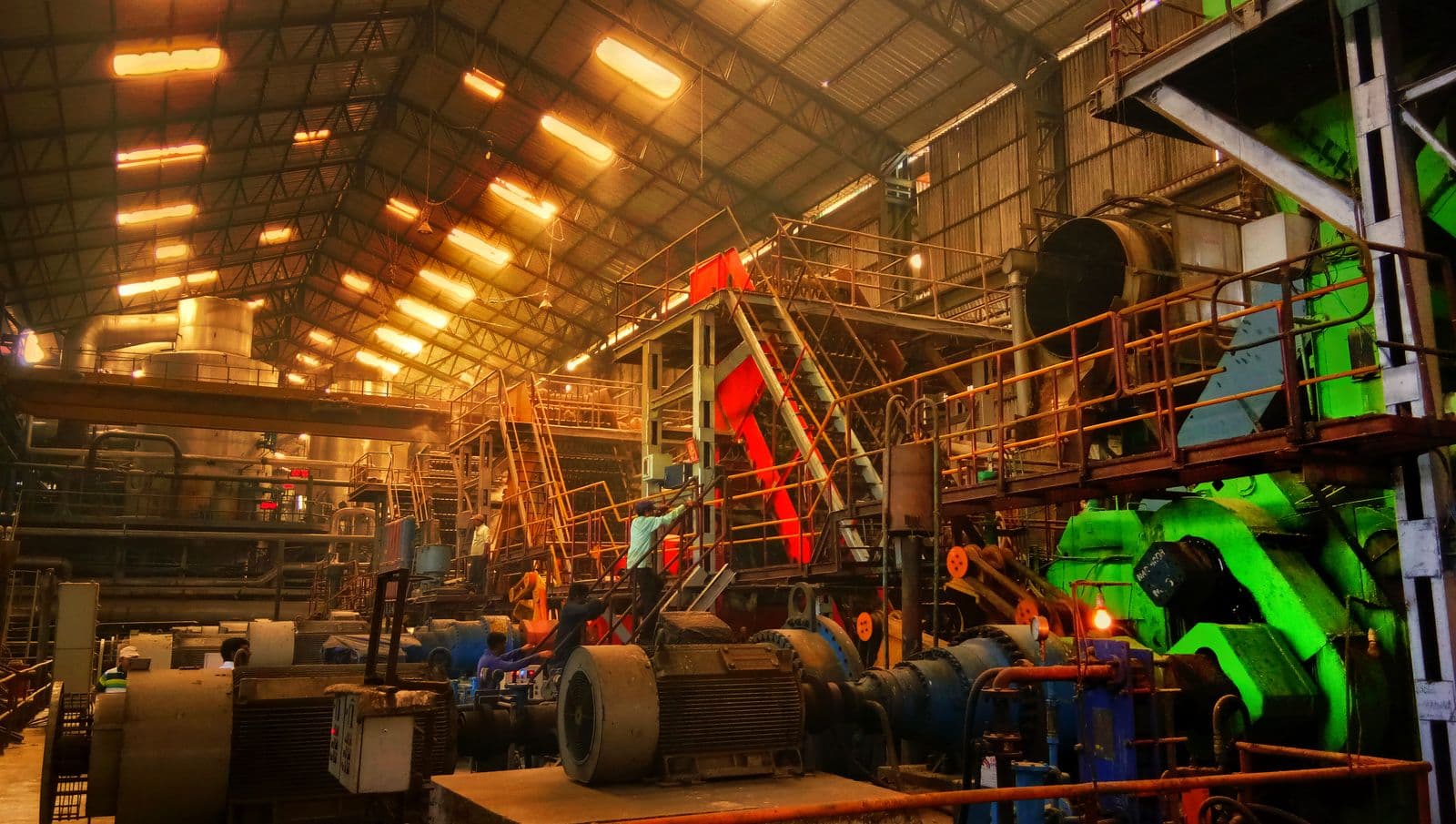
You will find Machined Seals in the parts of a plant where this particular duty actually occurs. In practice that means obsolete imported machinery with no catalogue seal size, rolling mill and press cylinders during an outage, imperial-size cylinders on older plant, and equally prototype and rebuild work in the machine shop, large-bore cylinders beyond moulded size ranges, emergency replacement of a single failed element. What links them is the duty rather than the machine name — production: CNC turned from bar or tube, no tooling. If your installation is not on that list it matters less than you would think: the operating condition decides the specification. Send us the load, the speed, the running temperature and the environment it runs in, and we will match it to the right execution in the SKF range and confirm what is in stock.
Specify it against the duty.
Specification here follows the operating condition, not the catalogue. Machine is down and the moulded size has a long lead time — A machined equivalent to the measured groove. The premium on the part is trivial against a day of lost production. The original seal is in pieces and cannot be measured — Send the housing dimensions instead — groove diameter, groove width and the mating surface. A profile can be worked back from the housing with confidence. The application needs a material no moulded seal is offered in — A machined element in that polymer. Turning from bar allows material selection to be driven by the duty rather than by what is in the mould shop. Where two of those apply at once, specify for the harsher of the two — under-specifying is what puts the part back on the bench a month later. Send us the duty and we will confirm the execution.
Ordering this from SES.
Photograph the failed seal next to a steel rule before it goes in the bin. A picture of the failure mode — extruded heel, hard-set lip, spiral tear — often changes the material we recommend for the replacement.