
Plain Bearings
Plain bearings slide rather than roll — a pin or shaft moves directly against a bearing surface. They belong where motion is slow or oscillating, the load is heavy for the space available, and a rolling bearing would simply brinell. The section splits into spherical plain bearings and rod ends, and into bushings, thrust washers and strips. SES holds the range as an authorised SKF distributor, covering types covered Spherical plain bearings, rod ends, bushings, washers, strips; sliding pairs Steel/steel, steel/bronze, steel/PTFE composite, POM; bore span A few millimetres to well over 1000 mm on spherical types; load Static capacity far above a rolling bearing of the same size. Executions include spherical plain bearings and rod ends, radial spherical plain bearings, angular contact spherical plain bearings, thrust spherical plain bearings, among others. It is specified most often into hydraulic cylinder eye and rod mountings on presses and tippers and linkage and pivot pins on material handling equipment. Every part is genuine SKF through official channels, with designation, specification and options confirmed against your duty before it ships — supplied from Kolkata and our branch network, with breakdown cover that does not sit in an inbox.
Send an enquiry
Check Price & Availability.
Give us the size or the failed part — we reply on WhatsApp.
Trusted across Metals & Energy
Supplying India’s Industrial Names.
From integrated steel plants to power utilities and EPC majors — the works that cannot afford a counterfeit part specify through SES.





















Motion
Slow rotation, oscillation or pure sliding
Load
Very high static capacity for the envelope
Lubrication
Relubricated, or maintenance-free composite
Misalignment
Taken up by the spherical types
Where it runs.
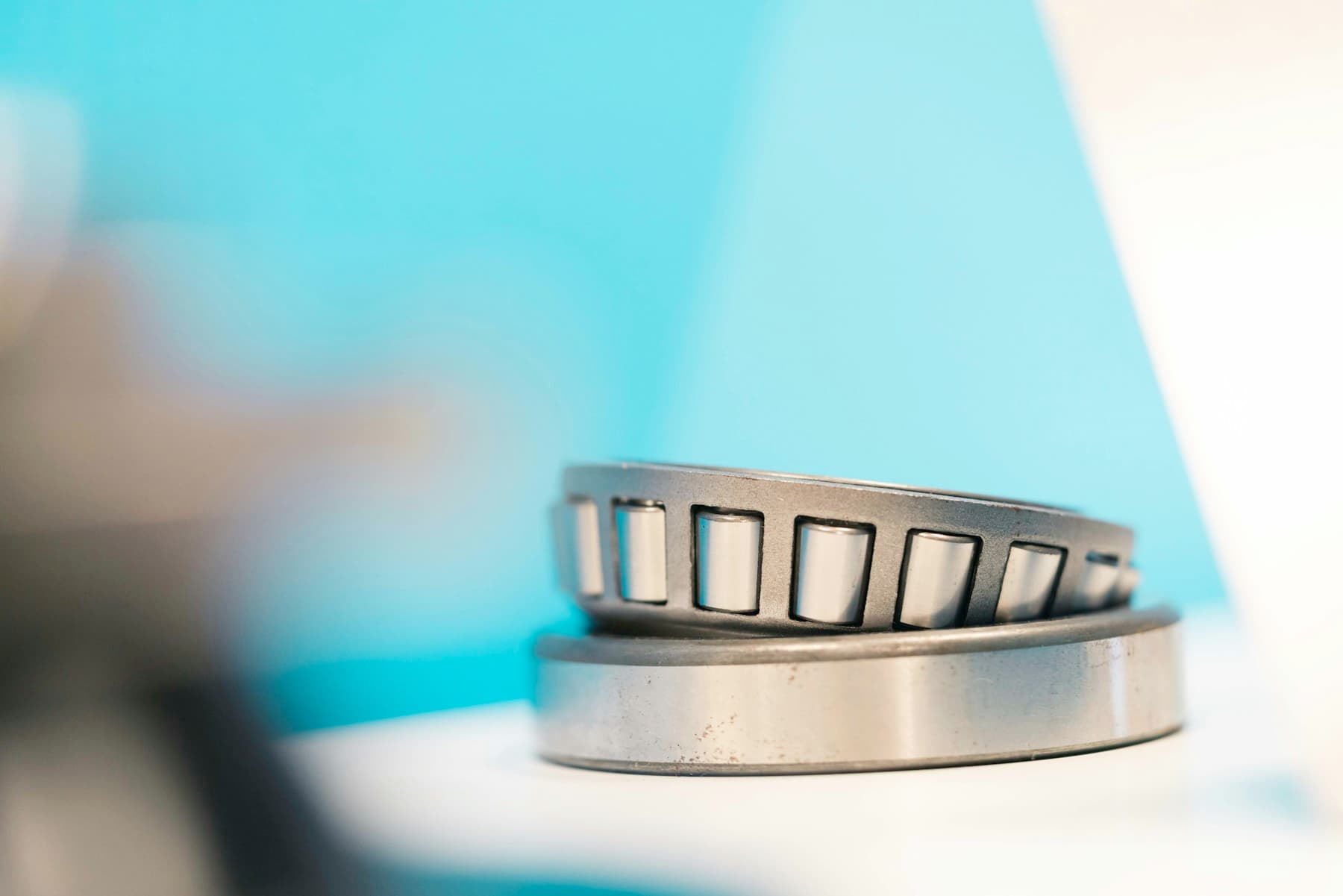
You will find Plain Bearings in the parts of a plant where this particular duty actually occurs. In practice that means hydraulic cylinder eye and rod mountings on presses and tippers, linkage and pivot pins on material handling equipment, gate, penstock and sluice hinges at water intakes, and equally crane hook blocks and sheave pins, steering and suspension pivots on plant vehicles, kiln door hinges and damper spindles. What links them is the duty rather than the machine name — motion: Slow rotation, oscillation or pure sliding. If your installation is not on that list it matters less than you would think: the operating condition decides the specification. Send us the load, the speed, the running temperature and the environment it runs in, and we will match it to the right execution in the SKF range and confirm what is in stock.
Specify it against the duty.
Specification here follows the operating condition, not the catalogue. The pin can be greased on a schedule and the load is very heavy — Steel-on-steel with relubrication grooves. It outlasts any maintenance-free liner under shock load, provided the grease genuinely goes in. There is no realistic chance of anyone greasing it — A PTFE composite maintenance-free type, and accept the lower rating. A steel type left dry picks up and welds itself to the pin. Pin and housing cannot be held in line — A spherical plain bearing rather than a bushing. A cylindrical bush loaded on one edge wears a taper and the joint then rattles. Where two of those apply at once, specify for the harsher of the two — under-specifying is what puts the part back on the bench a month later. Send us the duty and we will confirm the execution.
Ordering this from SES.
Get the duty cycle before choosing between relubricated and maintenance-free. Degrees of swing per stroke and strokes per hour decide that answer far more than the load figure does. Send the designation off the failed part and we will confirm the SKF equivalent and stock position.