
Rail Wheel Lubrication
Controlled application of lubricant to the wheel flange or the gauge face of the rail on rail-mounted plant. It cuts the sliding contact that occurs on curves and long travel runs, where flange and rail head wear otherwise consumes both wheel and track. SES holds the range as an authorised SKF distributor, covering application method Nozzle spray, brush applicator or solid stick; mounting Bogie-mounted on the machine or wayside on the track; metering Progressive divider, one outlet per wheel; control input Wheel pulse, travel encoder or curve proximity switch. Executions include onboard bogie-mounted flange lubricators, wayside rail gauge face applicators, top-of-rail friction modifier units, brush applicator assemblies, among others. It is specified most often into stacker and reclaimer travel bogies in coal and ore yards and wagon tipplers and side-arm chargers. Every part is genuine SKF through official channels, with designation, specification and options confirmed against your duty before it ships — supplied from Kolkata and our branch network, with breakdown cover that does not sit in an inbox.
Send an enquiry
Check Price & Availability.
Give us the size or the failed part — we reply on WhatsApp.
Trusted across Metals & Energy
Supplying India’s Industrial Names.
From integrated steel plants to power utilities and EPC majors — the works that cannot afford a counterfeit part specify through SES.












Applied to
Wheel flange or rail gauge face
Trigger
Distance travelled or curve detection
Lubricant
Flange grease or top-of-rail friction modifier
Prevents
Flange thinning, gauge face wear, curve squeal
Where it runs.
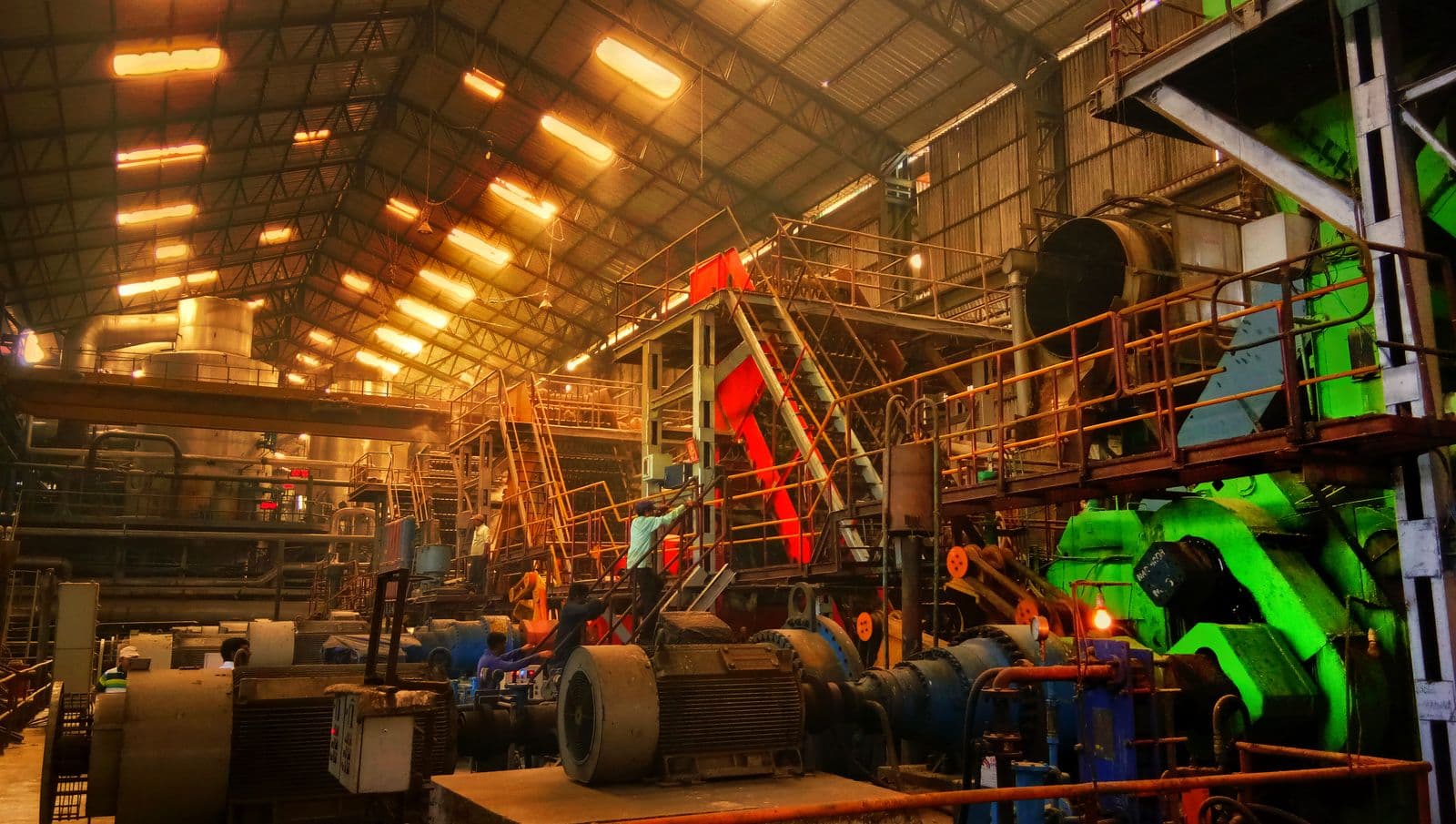
You will find Rail Wheel Lubrication in the parts of a plant where this particular duty actually occurs. In practice that means stacker and reclaimer travel bogies in coal and ore yards, wagon tipplers and side-arm chargers, ladle and slag pot transfer cars in steel melt shops, and equally rail-mounted gantry cranes on long travel tracks, charging cars and coke oven machines, plant shunting locomotives on tight yard curves. What links them is the duty rather than the machine name — applied to: Wheel flange or rail gauge face. If your installation is not on that list it matters less than you would think: the operating condition decides the specification. Send us the load, the speed, the running temperature and the environment it runs in, and we will match it to the right execution in the SKF range and confirm what is in stock.
Specify it against the duty.
Specification here follows the operating condition, not the catalogue. Wear measured on the flange rather than on the tread — Flange lubrication applied to the flange face only. Product that reaches the tread or rail head costs you traction and braking, and on a slope that is a safety matter, not a maintenance one. Squeal and lateral vibration on curves with no measurable flange loss — A top-of-rail friction modifier rather than grease. These are engineered to hold friction in a controlled band, whereas grease on the rail head simply removes it. Yard track that runs through wet ore or coal fines — A higher-tack lubricant and a shorter application interval. Slurry strips the film within a few passes and the interval that worked in the dry season will not hold in the monsoon. Where two of those apply at once, specify for the harsher of the two — under-specifying is what puts the part back on the bench a month later. Send us the duty and we will confirm the execution.
Ordering this from SES.
Aim the nozzle at the flange root, not the flange tip, and keep the quantity low enough that no lubricant is visible on the rail head after a pass. Over-application migrates to the running surface and the first sign is wheel slip on the ramp.