
Rod Seals
A rod seal sits in the gland of a hydraulic cylinder and holds fluid in while the rod strokes out. Machined from ring stock rather than moulded, so odd sizes and obsolete cylinders can be sealed without waiting on tooling. SES holds the range as an authorised SKF distributor, covering housing standards ISO 5597 and ISO 7425-2 grooves commonly covered; pressure range Low pressure to roughly 400 bar by profile and material; stroke speed Typically up to about 0.5 m/s for elastomer lips, higher for PTFE; temperature NBR about -30 to +100 °C, FKM to about +200 °C, PU about -30 to +110 °C. Executions include single-acting u-cup rod seals, buffer seals for pressure-spike protection, PTFE step seals with elastomer energiser, tandem rod seal sets, among others. It is specified most often into hydraulic press and forging press main cylinders and mould oscillation and ladle turret cylinders on a continuous caster. Every part is genuine SKF through official channels, with designation, specification and options confirmed against your duty before it ships — supplied from Kolkata and our branch network, with breakdown cover that does not sit in an inbox.
Send an enquiry
Check Price & Availability.
Give us the size or the failed part — we reply on WhatsApp.
Trusted across Metals & Energy
Supplying India’s Industrial Names.
From integrated steel plants to power utilities and EPC majors — the works that cannot afford a counterfeit part specify through SES.





















Duty
Reciprocating, fluid side
Pressure
Up to roughly 400 bar depending on profile
Materials
Polyurethane, NBR, FKM, PTFE composite
Sizes
Machined to order, including non-standard bores
Where it runs.
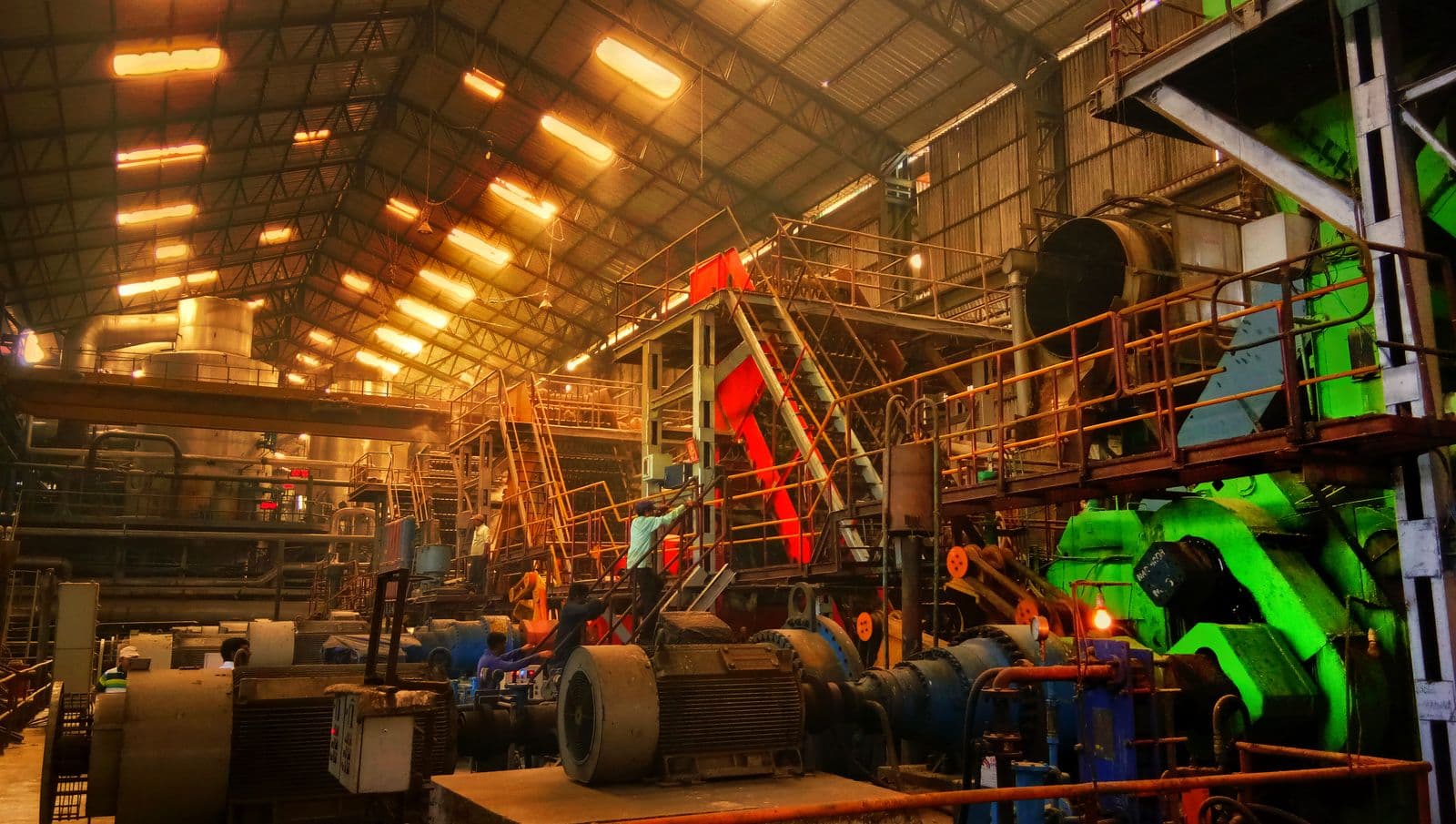
You will find Rod Seals in the parts of a plant where this particular duty actually occurs. In practice that means hydraulic press and forging press main cylinders, mould oscillation and ladle turret cylinders on a continuous caster, scrap shear and baling press cylinders in a steel yard, and equally boom, bucket and stick cylinders on mine and quarry machines, kiln damper and clinker cooler grate actuators in cement plant, clamp and injection cylinders on plastics machines. What links them is the duty rather than the machine name — duty: Reciprocating, fluid side. If your installation is not on that list it matters less than you would think: the operating condition decides the specification. Send us the load, the speed, the running temperature and the environment it runs in, and we will match it to the right execution in the SKF range and confirm what is in stock.
Specify it against the duty.
Specification here follows the operating condition, not the catalogue. The cylinder must hold a suspended load between strokes — A profile with a positive static sealing edge, not a plain U-cup. A lip that depends on pressure to energise will bleed and the load will creep down overnight. The system runs water-glycol or another HFC fire-resistant fluid — Do not fit polyurethane. It hydrolyses in the presence of water and goes soft and sticky within months; move to NBR or a PTFE-faced set. Oil temperature at the gland stays above about 100 °C — FKM compound. NBR takes a compression set at that temperature and the lip stops following rod eccentricity. Where two of those apply at once, specify for the harsher of the two — under-specifying is what puts the part back on the bench a month later. Send us the duty and we will confirm the execution.
Ordering this from SES.
Fit rod seals over a mounting thimble. Dragging a lip across a rod thread, a circlip groove or a cross-drilled port leaves a nick you cannot see, and the cylinder weeps from the first commissioning stroke.