
Rotary Seals
Machined rotary shaft seals run a lip against a turning shaft to hold oil or grease in and keep dust and water out. Turning them from blanks means the compound and the lip geometry can be chosen for the duty rather than by what is on the shelf. SES holds the range as an authorised SKF distributor, covering shaft range Small shafts up to several hundred millimetres; surface speed Elastomer lips to moderate speeds, PTFE much higher; pressure Standard lips near atmospheric, pressure profiles higher; temperature NBR to about +100 °C, FKM about +200 °C, PTFE wider still. Executions include spring-loaded single-lip rotary seals, dual-lip seals with integral dust lip, PTFE lip seals for dry and high-speed running, pressure-capable rotary seals, among others. It is specified most often into gearbox input and output shafts on conveyor drives and slurry and process pump shafts in a beneficiation plant. Every part is genuine SKF through official channels, with designation, specification and options confirmed against your duty before it ships — supplied from Kolkata and our branch network, with breakdown cover that does not sit in an inbox.
Send an enquiry
Check Price & Availability.
Give us the size or the failed part — we reply on WhatsApp.
Trusted across Metals & Energy
Supplying India’s Industrial Names.
From integrated steel plants to power utilities and EPC majors — the works that cannot afford a counterfeit part specify through SES.





















Motion
Continuous or oscillating rotation
Lip materials
PTFE compounds, FKM, NBR, PU
Case
Rubber-covered, steel-cased or all-polymer
Strength
Non-standard widths and dry-running duty
Where it runs.
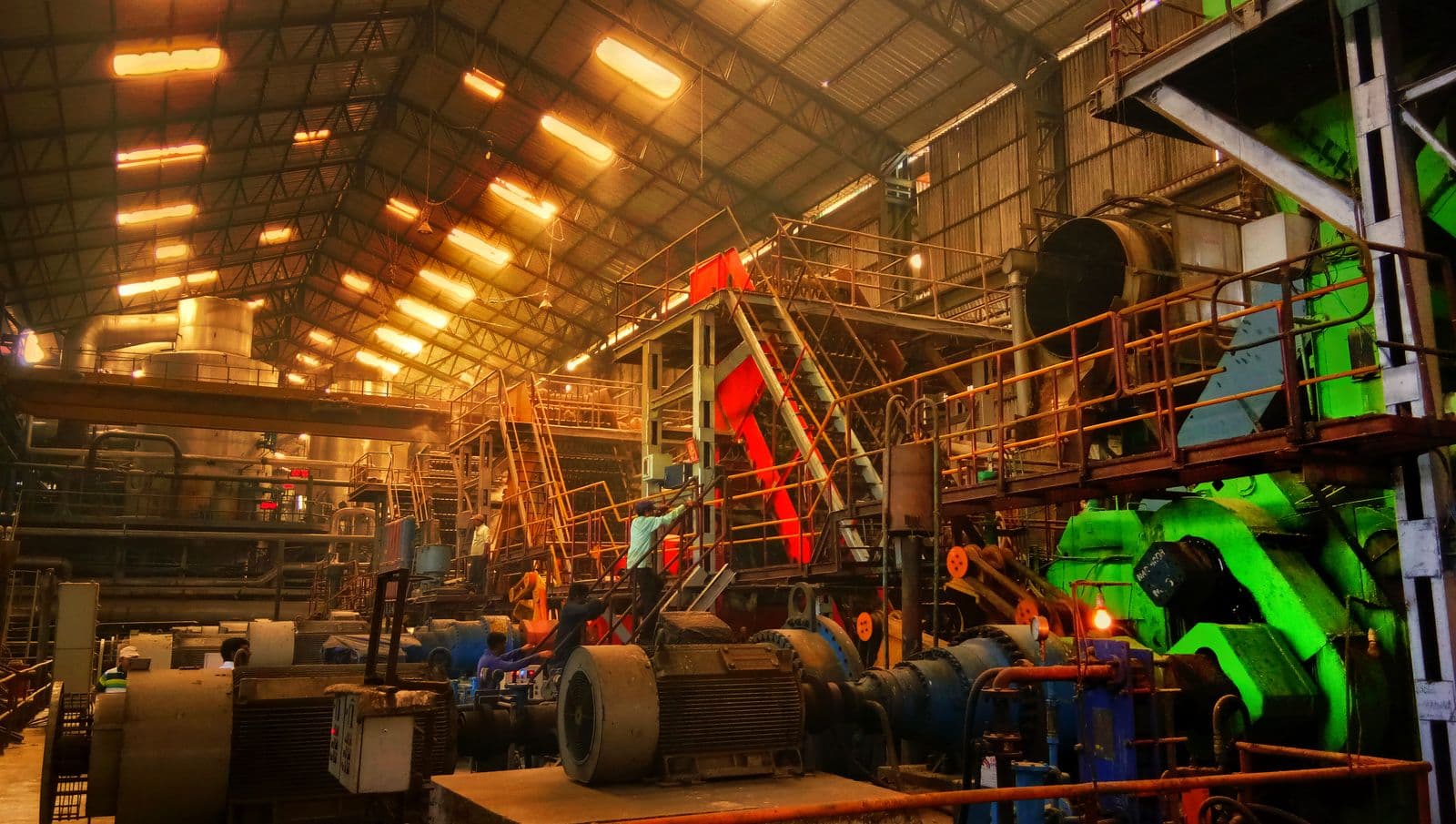
You will find Rotary Seals in the parts of a plant where this particular duty actually occurs. In practice that means gearbox input and output shafts on conveyor drives, slurry and process pump shafts in a beneficiation plant, blower and compressor shaft ends, and equally mixer and agitator shafts in chemical and paint plants, dryer roll journals on a paper machine, test rig and dynamometer spindles. What links them is the duty rather than the machine name — motion: Continuous or oscillating rotation. If your installation is not on that list it matters less than you would think: the operating condition decides the specification. Send us the load, the speed, the running temperature and the environment it runs in, and we will match it to the right execution in the SKF range and confirm what is in stock.
Specify it against the duty.
Specification here follows the operating condition, not the catalogue. Surface speed is high and the seal may run with only oil mist — A PTFE lip. A nitrile lip run dry at speed will glaze, harden and cut a groove into the shaft within days. The shaft already carries a worn seal groove — A different seal width so the new lip runs on fresh metal, or a wear sleeve. Refitting to the same track guarantees a repeat leak. The medium is a synthetic gear oil with an EP additive package — Confirm compound compatibility before ordering. Some additive packages attack nitrile lips and the seal goes hard while the shaft looks perfect. Where two of those apply at once, specify for the harsher of the two — under-specifying is what puts the part back on the bench a month later. Send us the duty and we will confirm the execution.
Ordering this from SES.
Never plunge-grind a shaft seal track by traversing a wheel along it. The lead left by a traverse grind acts like a screw thread and pumps oil out past a perfectly good lip. Send the designation off the failed part and we will confirm the SKF equivalent and stock position.