
Self-aligning Ball Bearings
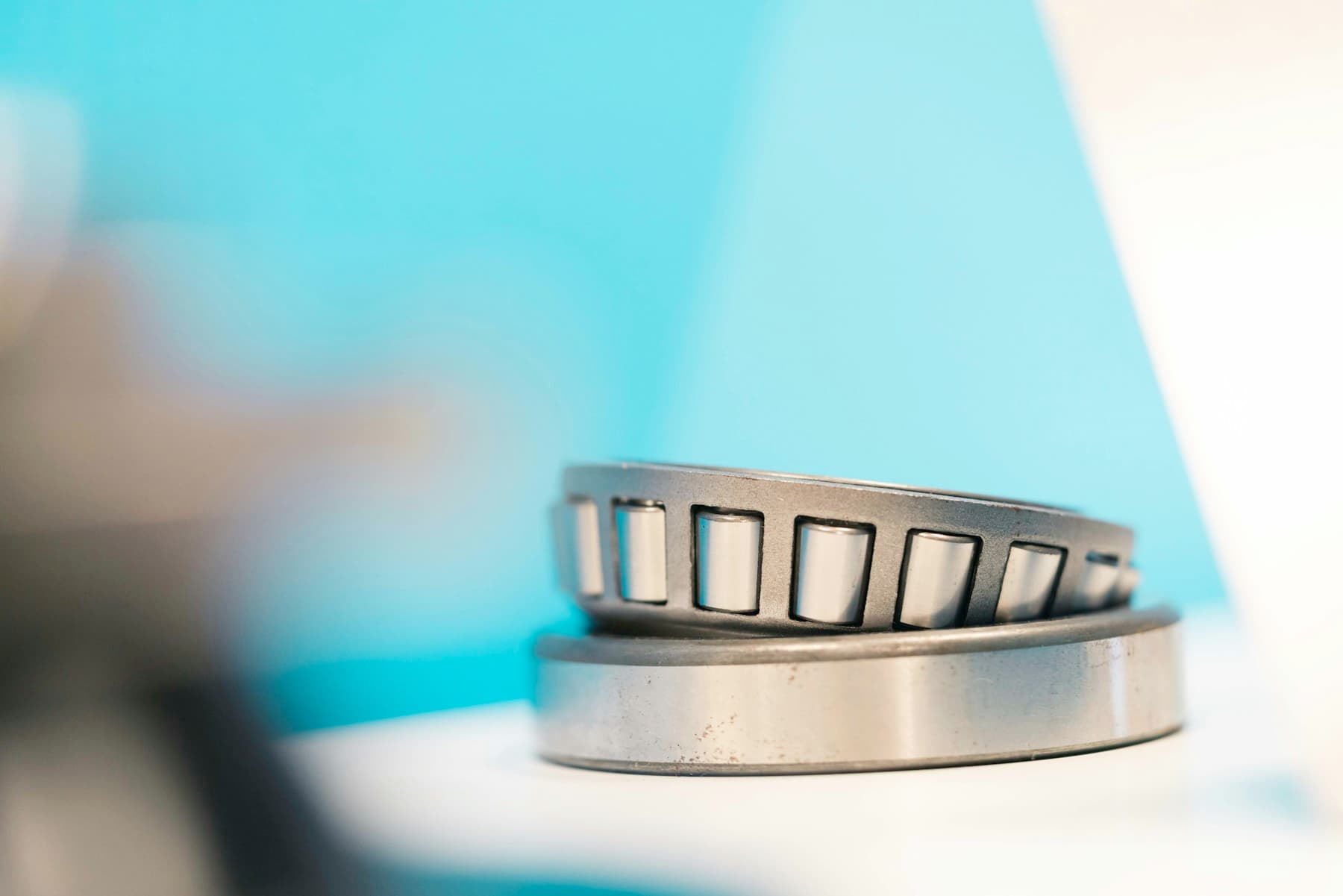
Two rows of balls run on a single sphered raceway ground into the outer ring, so the inner ring and ball set can swivel freely inside it. Shaft deflection and out-of-line housings are absorbed by the geometry rather than by the raceway edges. SES holds the range as an authorised SKF distributor, covering bore range About 10 mm to 120 mm on common series; series 12 and 22 dimension series; bore forms Cylindrical, and tapered 1:12 for adapter sleeve mounting; misalignment Roughly 1.5 to 3 degrees, lower when sealed. Executions include cylindrical bore execution, tapered bore with adapter sleeve, sealed self-aligning ball bearings, extended inner ring execution, among others. It is specified most often into long line shafts on textile and jute machinery and ventilation and dust extraction fan shafts. Every part is genuine SKF through official channels, with designation, specification and options confirmed against your duty before it ships — supplied from Kolkata and our branch network, with breakdown cover that does not sit in an inbox.
Send an enquiry
Check Price & Availability.
Give us the size or the failed part — we reply on WhatsApp.
Trusted across Metals & Energy
Supplying India’s Industrial Names.
From integrated steel plants to power utilities and EPC majors — the works that cannot afford a counterfeit part specify through SES.




















Misalignment
Tolerates several degrees by series
Friction
Lowest of all bearing types
Load
Moderate radial, light axial
Mounting
Cylindrical or tapered bore with sleeve
Where it runs.
You will find Self-aligning Ball Bearings in the parts of a plant where this particular duty actually occurs. In practice that means long line shafts on textile and jute machinery, ventilation and dust extraction fan shafts, wood-working, saw mill and chipper shafts, and equally light conveyor drive and bend pulleys, agricultural and rice mill machinery shafts, fabricated housings where bore alignment cannot be guaranteed. What links them is the duty rather than the machine name — misalignment: Tolerates several degrees by series. If your installation is not on that list it matters less than you would think: the operating condition decides the specification. Send us the load, the speed, the running temperature and the environment it runs in, and we will match it to the right execution in the SKF range and confirm what is in stock.
Specify it against the duty.
Specification here follows the operating condition, not the catalogue. Housings are welded into a fabricated frame rather than line-bored — A self-aligning ball bearing, since the sphered outer raceway removes the alignment error instead of transmitting it into the raceway. The shaft is plain commercial bar with no machined seats — The tapered bore version on an adapter sleeve, which grips the shaft without any turning work. Load is heavy for the shaft size — A spherical roller bearing instead. Two rows of balls on a sphered track have modest capacity, and overloading flattens the ball track quickly. Where two of those apply at once, specify for the harsher of the two — under-specifying is what puts the part back on the bench a month later. Send us the duty and we will confirm the execution.
Ordering this from SES.
Self-aligning does not mean self-forgiving on the sleeve. Drive the adapter sleeve up by a measured reduction in radial internal clearance taken with a feeler gauge, not by counting flats on the nut. Send the designation off the failed part and we will confirm the SKF equivalent and stock position.