
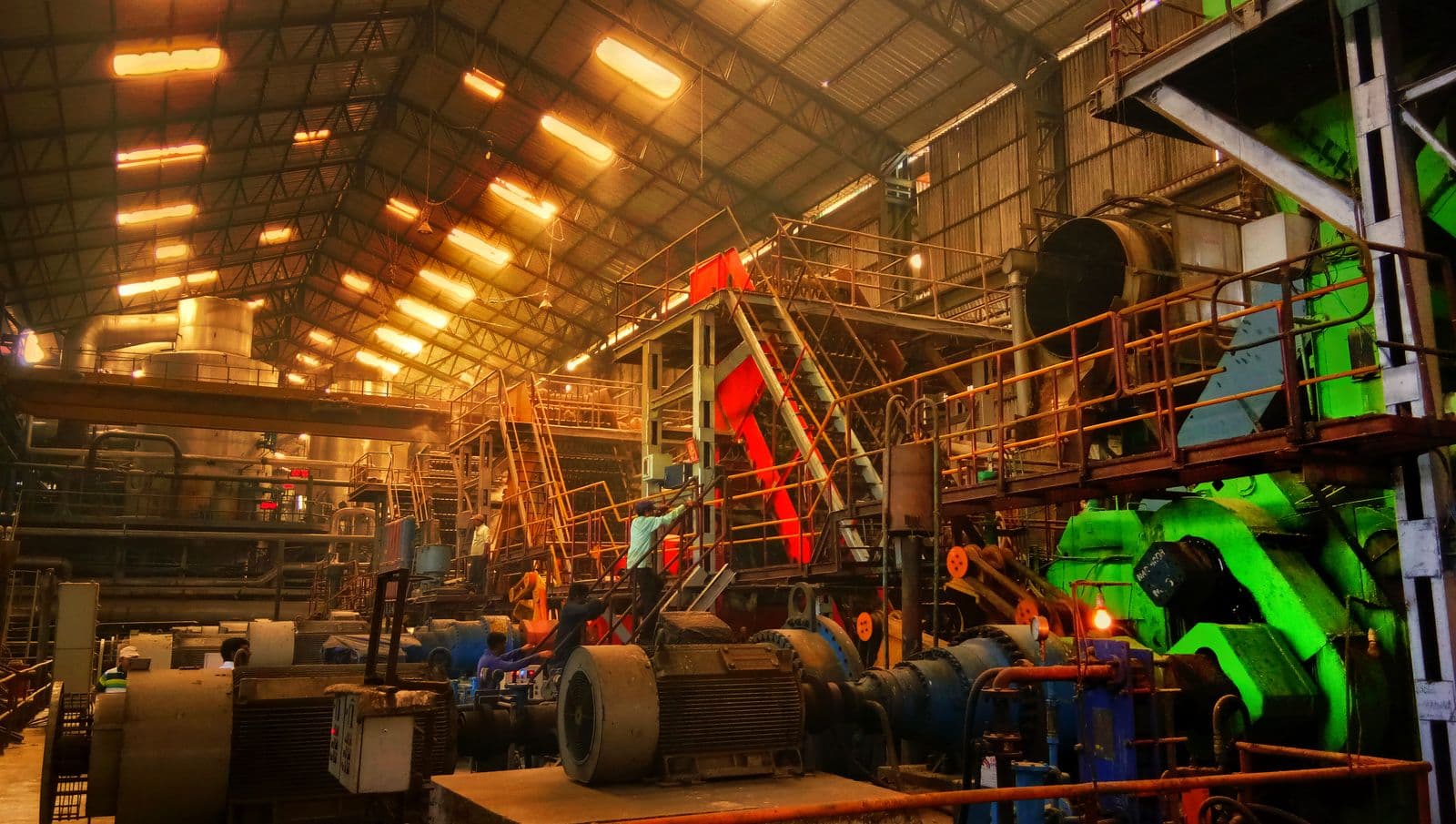
Strips
Flat sliding stock, supplied in lengths and cut to suit. Where a machine slides along a guide instead of turning on a pin, strips provide the wear surface, and they are fixed to whichever part you can most easily take off. SES holds the range as an authorised SKF distributor, covering supply form Flat strip in standard lengths and widths; thickness Thin sections, machinable to fit; materials Steel-backed PTFE composite, steel-backed POM; fixing Screwed, bonded, or held in a machined pocket. Executions include PTFE composite strip, POM lined strip, grooved executions for debris clearance, standard and heavy thickness sections. It is specified most often into gib and guideway facings on presses and shears and telescopic boom wear pads on cranes and handlers. Every part is genuine SKF through official channels, with designation, specification and options confirmed against your duty before it ships — supplied from Kolkata and our branch network, with breakdown cover that does not sit in an inbox.
Send an enquiry
Check Price & Availability.
Give us the size or the failed part — we reply on WhatsApp.
Trusted across Metals & Energy
Supplying India’s Industrial Names.
From integrated steel plants to power utilities and EPC majors — the works that cannot afford a counterfeit part specify through SES.



















Motion
Linear sliding
Form
Flat strip, cut and drilled to suit
Liner
PTFE composite or POM on a steel backing
Fixing
Countersunk screws, bonding, or a machined pocket

Where it runs.
You will find Strips in the parts of a plant where this particular duty actually occurs. In practice that means gib and guideway facings on presses and shears, telescopic boom wear pads on cranes and handlers, slide plates under chute and gate frames, and equally tool slide facings on fabrication machinery, expansion sliding supports under ducting and pipework, sliding covers and guards on machine tools. What links them is the duty rather than the machine name — motion: Linear sliding. If your installation is not on that list it matters less than you would think: the operating condition decides the specification. Send us the load, the speed, the running temperature and the environment it runs in, and we will match it to the right execution in the SKF range and confirm what is in stock.
Specify it against the duty.
Specification here follows the operating condition, not the catalogue. The guide is long and the machine expands as it warms — Segment the strip rather than fitting one continuous length. A long strip pinned at both ends buckles as it grows. Strips are screwed through the sliding face — Countersink deep enough that the head still sits below the fully worn depth, not merely below the new surface. Debris drops onto the guideway — Grooved strip, or a chamfered leading edge, so swarf is pushed clear instead of dragged along. Trapped grit turns a sliding face into a file. Where two of those apply at once, specify for the harsher of the two — under-specifying is what puts the part back on the bench a month later. Send us the duty and we will confirm the execution.
Ordering this from SES.
Fit strips in pairs on opposite faces of a guide and shim them to equal clearance. One thick strip and one thin one lets the slide cock in the guide, and it will then wear a wedge into both of them. Send the designation off the failed part and we will confirm the SKF equivalent and stock position.