
Take-up Roller Bearing Units
A spherical roller bearing unit in a housing that slides within a take-up frame, so the whole bearing travels along the belt axis when you tension. Standard fit at conveyor tail ends and on chain drives. SES holds the range as an authorised SKF distributor, covering frame types Wide slot and narrow slot; shaft sizes Roughly 25 mm to 125 mm; housing material Grey cast iron, cast steel on request; travel Set by frame length, not by the unit. Executions include wide slot take-up units, narrow slot take-up units, units supplied with matched take-up frames, screw take-up executions, among others. It is specified most often into belt conveyor tail pulleys in coal handling plants and chain drive tensioners on bucket elevators. Every part is genuine SKF through official channels, with designation, specification and options confirmed against your duty before it ships — supplied from Kolkata and our branch network, with breakdown cover that does not sit in an inbox.
Send an enquiry
Check Price & Availability.
Give us the size or the failed part — we reply on WhatsApp.
Trusted across Metals & Energy
Supplying India’s Industrial Names.
From integrated steel plants to power utilities and EPC majors — the works that cannot afford a counterfeit part specify through SES.





















Function
Belt or chain tensioning
Travel
Along the frame, screw or gravity driven
Bearing
Spherical roller, self-aligning
Housing
Machined guide faces

Where it runs.
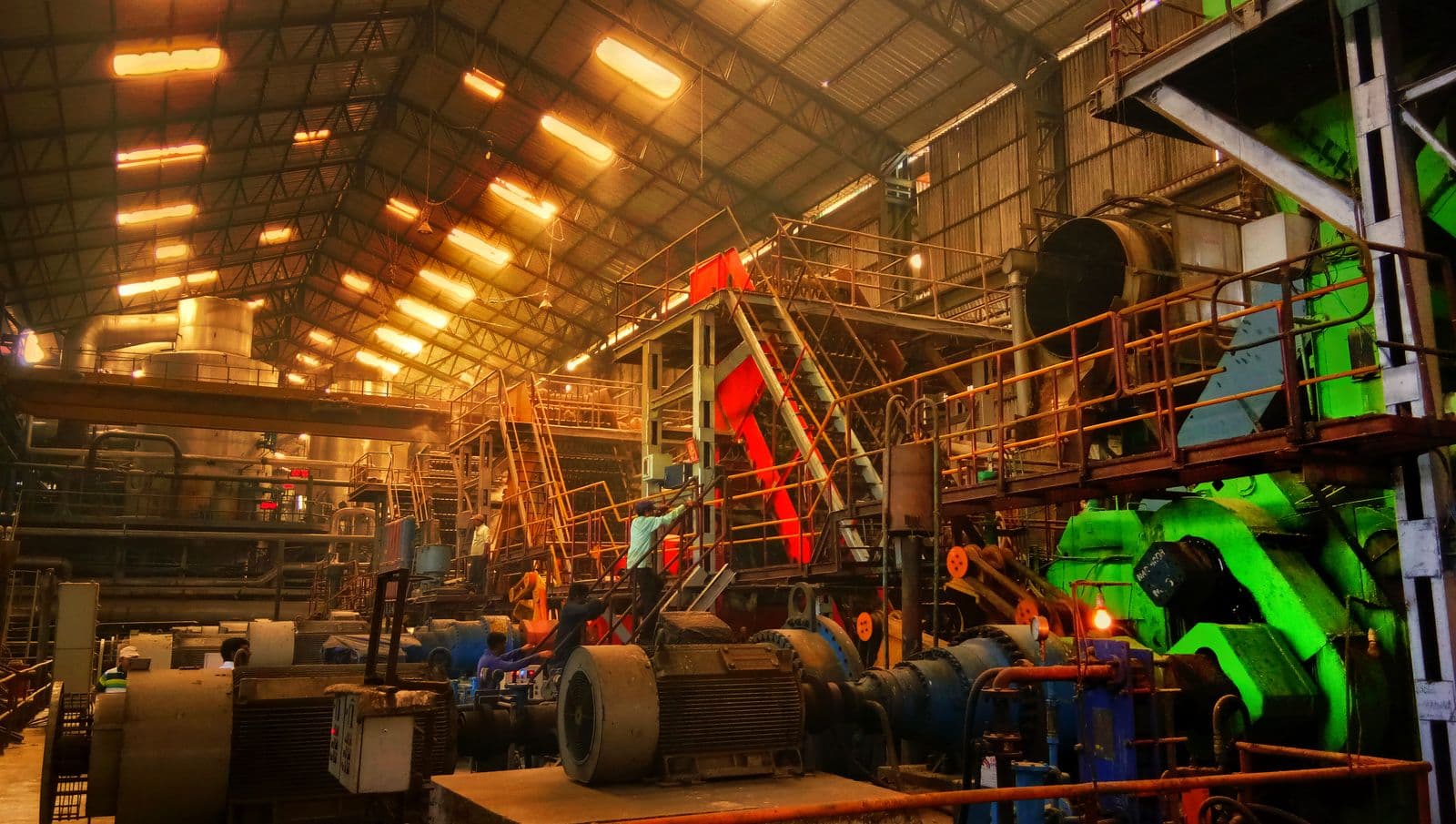
You will find Take-up Roller Bearing Units in the parts of a plant where this particular duty actually occurs. In practice that means belt conveyor tail pulleys in coal handling plants, chain drive tensioners on bucket elevators, apron feeder tail shafts, and equally rubber and textile calender feed rolls, sugar mill cane carrier tail shafts, gravity take-up towers on long overland belts. What links them is the duty rather than the machine name — function: Belt or chain tensioning. If your installation is not on that list it matters less than you would think: the operating condition decides the specification. Send us the load, the speed, the running temperature and the environment it runs in, and we will match it to the right execution in the SKF range and confirm what is in stock.
Specify it against the duty.
Specification here follows the operating condition, not the catalogue. Take-up frame is field-fabricated rather than bought as a matched set — The unit series first, then cut the frame to its guide width. Housings forced into an undersized frame bind, and the belt tracks off within days. Tensioning screw is accessible from one side only — A wide-slot housing with a captive take-up nut. Driving one screw against a jammed opposite side skews the pulley and tears the belt edge. Abrasive fines settle in the take-up guides — Sliding faces that can be greased, plus a wiper on the guide. Otherwise the housing seizes in the frame and the tension setting is lost. Where two of those apply at once, specify for the harsher of the two — under-specifying is what puts the part back on the bench a month later. Send us the duty and we will confirm the execution.
Ordering this from SES.
Tension both sides equally and measure it — count turns on each screw rather than judging by eye. Half the belt tracking complaints we see trace back to a tail shaft pulled out of square at the take-up.